
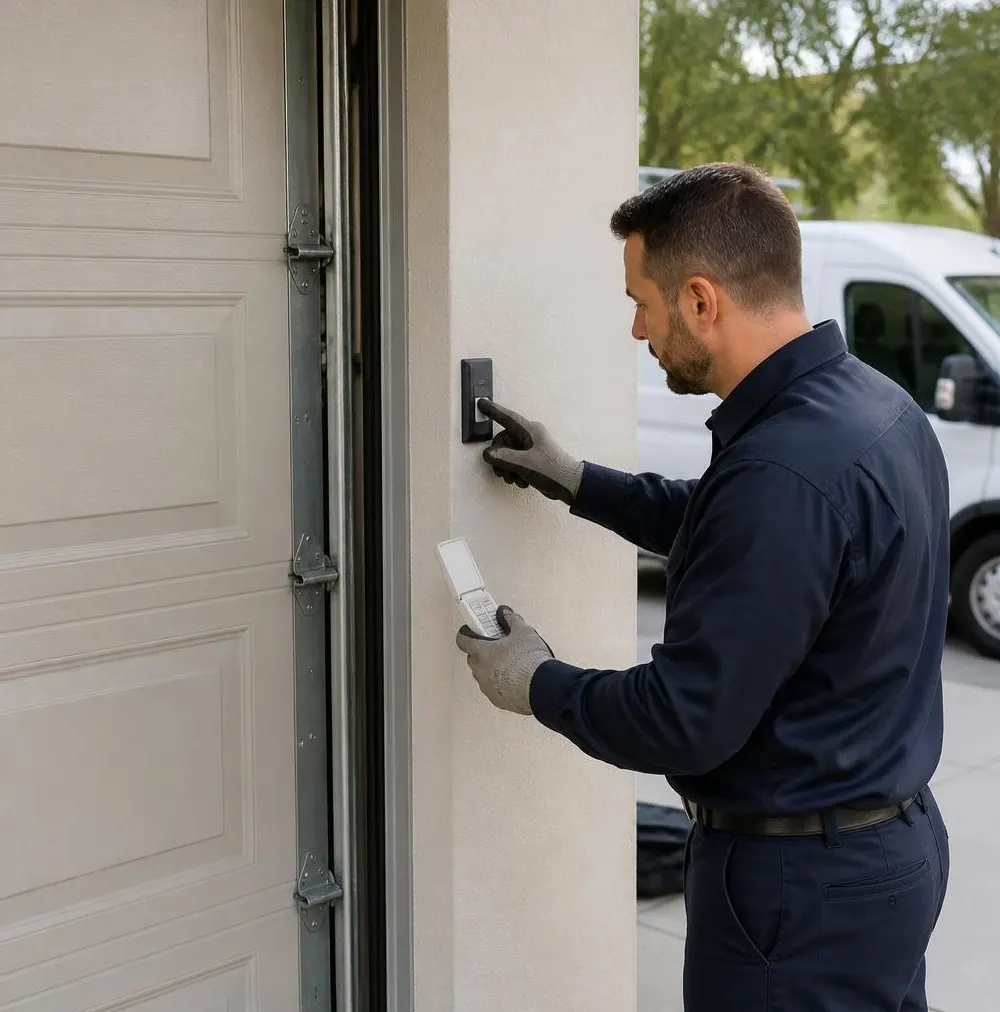
A typical fall service call in this area starts the same way: the homeowner says the door "used to be quiet" and now grinds or squeals on the way up. Nine times out of ten, the technician finds a thick gray paste caked onto the rollers and hinges — a mix of old grease, summer dust, and a little wildfire ash from the dry season, all baked on by months of hot, dry weather. Sometimes there's a can of WD-40 sitting in the garage, which explains part of the problem: it's a great cleaner and penetrant, but it evaporates fast and leaves surfaces tackier, not slicker, so they attract even more grit.
Fall, right before the winter rains move in, is the best time to clean that off and relubricate properly. It protects moving parts from the rust that shows up once humidity rises, and it gets rid of the dry-season buildup before it hardens further.
Tools You'll Need
- Stepladder
- Clean lint-free rags
- Soft-bristle brush or shop vacuum with a brush attachment
- Silicone-based garage door lubricant or white lithium grease (spray can, with a thin straw nozzle)
- Safety glasses and work gloves
- A friend to help steady the ladder near the top track
Step-by-Step: Lubricating Your Garage Door
- Close the door and disconnect the opener. Pull the manual release cord so the door is fully under your control before you start working near it.
- Inspect before you clean. Look at hinges, rollers, tracks, and the torsion spring area for rust, frayed cables, or bent hardware. Note anything that looks damaged — don't lubricate over a problem that needs replacing.
- Wipe down the tracks. Use a dry rag to remove dust, cobwebs, and old grease residue. Never lubricate the tracks themselves — they should stay clean and dry so the rollers can glide, not slide through grease.
- Lubricate the hinges. Spray a light coat of silicone or white lithium grease on each hinge pivot point, working the door up and down a few inches to let it work in.
- Lubricate roller bearings, not the wheels. If you have steel rollers with ball bearings, spray the bearing, not the nylon or steel wheel surface. Nylon rollers generally don't need lubrication at all — over-greasing them just collects dust.
- Give the springs a light coat. A thin layer of lubricant on the torsion spring coil reduces friction noise and helps prevent corrosion, especially with winter rain on the way. Don't touch the spring's tension or hardware — that's a technician job.
- Lubricate the opener's drive rail. Chain or screw-drive openers need a light coat along the rail; follow the manufacturer's guidance for your specific model.
- Wipe off excess. Extra grease just becomes a dust magnet during our dry months. A thin, even coat is all it takes.
- Reconnect the opener and test. Run the door through a full cycle, listening for any remaining grinding or squealing.
Products to Use — and What to Avoid
Stick with a silicone-based garage door lubricant or white lithium grease made for garage door hardware. Both resist washing out in winter rain and hold up well through hot, dry summers without drying into a crust.
Avoid WD-40 as a long-term lubricant — it's fine for loosening a stuck or rusted bolt, but it's not a lubricant for ongoing use. Also skip motor oil, axle grease, and petroleum-based grease gun products; they're too thick, attract dust and ash, and can gum up over a dry season.
What a Homeowner Can Safely Do vs. What Needs a Technician
Cleaning and lubricating hinges, rollers, and the opener rail is well within reach for most homeowners with basic tools. What's not a DIY job: adjusting or replacing torsion springs, repairing frayed cables, realigning bent tracks, or working on earthquake retrofit brackets and panel attachments. Springs are under heavy tension and cause serious injuries when handled without the right tools and training.
When to Call Lincoln Garage Door
If lubrication doesn't quiet the noise, if you spot rust on the spring coils, or if the door feels heavier or slower than usual, it's time for a professional look. Our Garage Door Maintenance visits cover a full inspection, hardware tightening, and spring tension checks that go beyond what's safe to do from a ladder at home. If a spring has already started to sag or show rust pitting, our Spring Replacement service handles that safely with the right tension tools.
Getting ahead of winter rain now means fewer surprises later. Give Lincoln Garage Door a call to schedule a maintenance visit before the wet season settles in — serving Lincoln, CA and the surrounding area.